
How heavy should a weighted vest be? Walking and training with the Henkelion vest
How heavy should your weighted vest be? Match the Henkelion vest from 4 to 20 lb to your body weight, then start walking and training in it.
Read the guideCarrier size and travel
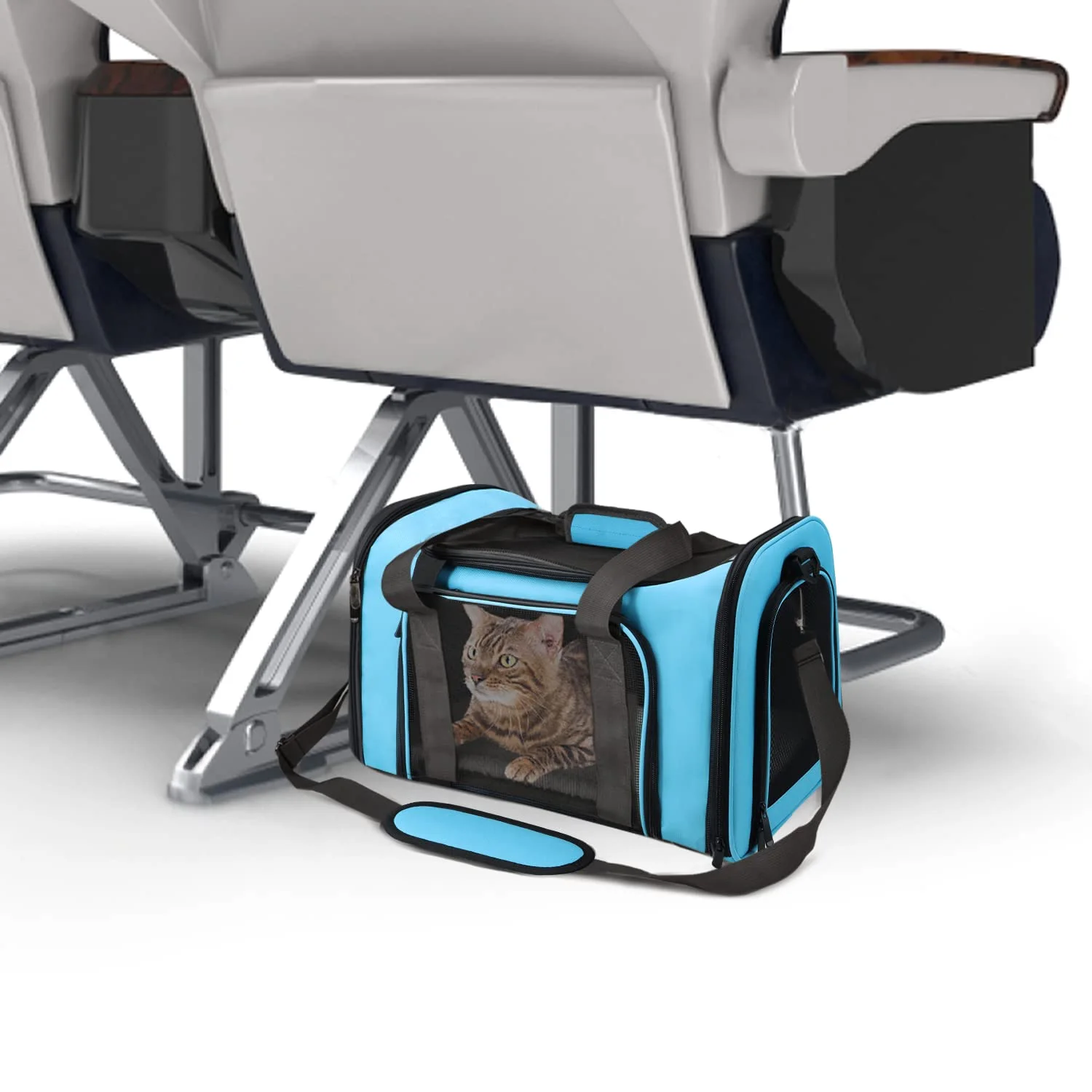
Most people choose a carrier by the number on the bathroom scale, and that is where the trouble starts. A 12 lb cat with long legs and a 12 lb dog with a deep chest need different room, even though the scale reads the same for both. Our rule for the Henkelion Soft-Sided Pet Carrier is short: measure your pet's length and height first, and look at weight second.
The carrier comes in two sizes. Medium measures 17 x 11 x 11 in on the outside. It is made for cats, puppies and small dogs whose body fits within 15 x 9 x 9 in and who weigh up to 15 lb. Large measures 20 x 13 x 13 in and takes pets within 18 x 12 x 12 in and up to 25 lb. Each size leaves about two inches of length beyond the longest pet it is designed for, which is the room a cat uses to turn and curl.
| Medium | Large | |
|---|---|---|
| Outside size | 17 x 11 x 11 in | 20 x 13 x 13 in |
| Pet size it is designed for | Body within 15 x 9 x 9 in | Body within 18 x 12 x 12 in |
| Weight limit | Up to 15 lb | Up to 25 lb |
| Airplane cabin | Designed for cabin travel, airline under-seat limit applies | Not for airplane cabins |
| Typical trips | Flights, car rides, vet visits | Car trips, the vet, daily travel |
Medium is the size we design for cabin travel. Large is not for airplane cabins at all. It is the carrier for the back seat, the clinic and everyday errands, where a bigger cat or a small dog of up to 25 lb needs space to stand and turn.
If your pet sits between the two, think about where you travel most. A 13 lb cat that flies twice a year belongs in the Medium, provided its length and height fit the 15 x 9 x 9 in frame. Another 13 lb cat, one that measures 17 inches from nose to tail base, has outgrown that frame and rides in a Large, by car. Both sizes come in black, gray, blue, green, pink and purple, and the Henkelion size guide lists the same numbers next to the rest of our gear.

Pet carrier
For the vet, the car and cabin flights.

Two numbers matter most: length and height. Pick a calm moment, ideally after a meal, when your cat is slow and willing to stand. For length, run a soft tape from the tip of the nose to the base of the tail. Stop short of the tail tip, because the tail wraps around the body once the pet lies down. Height comes from the floor: let your pet stand on all four feet and measure to the top of the head. Width across the shoulders or hips is the third figure. It rarely decides anything for a slim cat, but a stocky little dog can surprise you.
Compare those figures with the pet size in the table, not with the outside size of the bag. A cat that measures 15 inches long and 9 inches tall fits the Medium design. One that measures 16 by 10 has outgrown it, even at 11 lb, and the Large is the honest answer.
Airlines look at the same thing in their own words. Delta asks that a cabin pet can move around in the kennel "without touching or sticking out from the sides." American Airlines says pets must be small enough to fit comfortably inside the closed, zipped carrier. Neither page starts with weight.
Then try the fit for real. Zip your pet in for a few minutes on the living room floor and watch. A cat should be able to turn around and lie down curled up without its head pressing into the mesh roof. If the back arches to fit, or the ears flatten against the top panel, go up a size. The three-layer mat at the bottom is a wood board under foam and woolly fleece. It keeps the floor flat when the bag is lifted, so the posture you see on the rug is a fair preview of the trip.
No carrier fits under every seat, because seats differ from plane to plane. Delta says the under-seat space varies by aircraft and recommends a soft-sided kennel of no more than 18 x 11 x 11 in, a size it says fits most aircraft types. American Airlines lists the same 18 x 11 x 11 in for soft-sided carriers on all flights, with smaller limits for hard-sided kennels. Alaska Airlines lists 17 x 11 x 9.5 in for soft-sided carriers and does not allow hard-sided kennels in the cabin at all.
| Airline | Soft-sided carrier size on the airline's page | Other rules on the same page |
|---|---|---|
| Delta | 18 x 11 x 11 in recommended, under-seat space varies by aircraft | Pet at least 8 weeks old for domestic travel, ventilation openings on 3 sides for domestic flights |
| American Airlines | 18 x 11 x 11 in on all flights | Hard-sided limits are 19 x 13 x 9 in on mainline and 16 x 12 x 8 in on American Eagle, pet at least 8 weeks old within the U.S. |
| Alaska Airlines | 17 x 11 x 9.5 in | Hard-sided kennels not allowed in the cabin, pet at least 8 weeks old |
Our Medium carrier measures 17 x 11 x 11 in. On paper that sits inside the Delta and American figures. Alaska's listed height is 9.5 in, and the Medium stands 1.5 in taller, so if your ticket is with Alaska Airlines, ask the airline about the Medium before you book. These figures come from each airline's own page in October 2026, and pages change.
Read the current rule for every airline on your ticket, including a partner flight on a connection. Delta tells travelers to verify a partner airline's own policy for in-cabin animals. All three airlines also cap the number of pets on each flight, and Alaska Airlines says reservations must be made before the day of travel. A seat for you is not a seat for your cat until the airline has added the pet to the booking.
The carrier takes one of your two cabin items. American Airlines lets you bring one more item with your pet, either a personal item or a carry-on, not both. Alaska Airlines describes the same choice, and Delta allows one personal item or one carry-on alongside the kennel. Pack with that in mind, because the bag you usually slide under the seat now goes overhead or stays home.
Seat choice narrows too. Delta, American and Alaska all keep pets out of bulkhead and exit rows, where there is no under-seat space or where the floor must stay clear. Choose your seat after the pet is on the booking, not before.
Security is the moment owners forget. Delta says you are required to remove your pet from the kennel at the security checkpoint, so the carrier goes through the scanner empty while you hold your cat. A harness fitted at home and clipped to the inside safety leash before you open the top gives you a second hold in a crowded line.
On board, American Airlines says your pet stays in the carrier and under the seat in front of you for the whole flight. Alaska Airlines asks that the carrier be lined with absorbent material to avoid leaks, which is worth doing on top of the fleece mat. The same page says sedation is not advised, because the effects of tranquilizers at high altitude are unpredictable, and leaves that decision to your veterinarian.
Our padded shoulder strap carries the weight through long terminals and keeps both hands free at the gate. Once you land, the carrier folds flat for the hotel closet.

The two loop handles on our carrier take a car seat belt or the strap of a rolling suitcase. Threading the lap belt through both loops holds the bag on the seat instead of letting it slide at every turn. That is the feature, and it is useful. What veterinary groups advise about where the carrier rides is less settled, and you should hear both views.
An AAFP and ISFM handout for cat owners says carriers should be seat-belted into the car, to keep the cat safer and to make the ride less bumpy. A newer Feline Veterinary Medical Association carrier guide puts the carrier on the floor behind the driver or passenger seat. It reserves seat belts for carriers that are crash test certified and warns that a belt can otherwise crush the carrier. We do not sell the Henkelion carrier as crash test certified. For a cat, the floor behind a front seat is the spot the newer guide names, and the loops then serve for carrying.
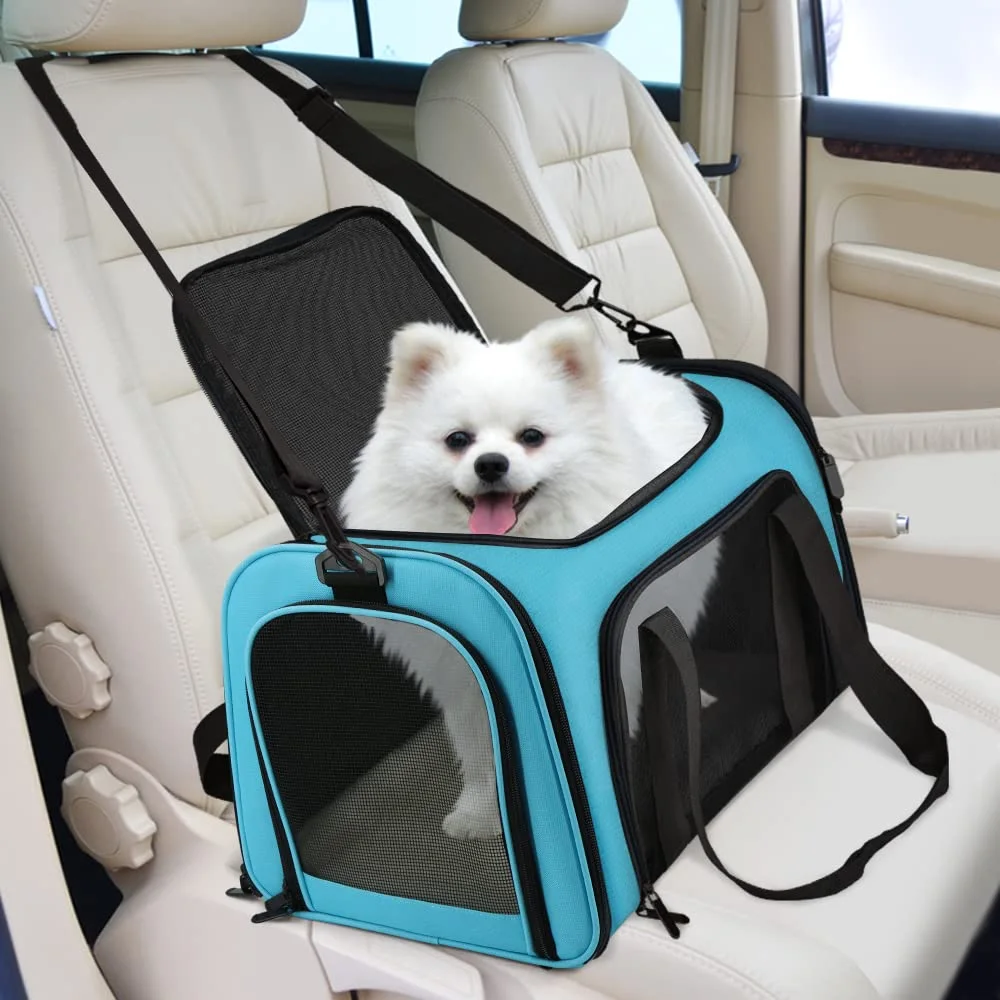
Whatever spot you choose, the same guide asks for smooth driving and a level carrier, so a sharp stop does not tip your pet into the mesh wall. Mesh on four sides lets air through on a warm drive, and a light towel over part of the bag gives a nervous cat somewhere to hide from passing traffic. The Large carrier earns its place here. A 20 lb dog that would never fit under an airplane seat can lie down full length on the floor of a sedan in the 20 x 13 x 13 in bag.
Practice before a long trip. The FVMA guide suggests short car rides once your cat feels comfortable in the carrier, and five minutes around the block teaches more than any amount of reassurance on the highway.
A cat that sees the carrier only on clinic days learns to vanish when the bag appears. The AAFP handout has a plan for the morning when there is no time to train. Put the carrier in a small room with few hiding places, bring the cat in and close the door. Move slowly, and do not chase. If the carrier opens on top, the handout says to gently cradle your cat and lower it in, which is exactly what the top opening on our carrier is for. Tipping a cat in through a side door, head first, is the move most cats remember.
Carrying matters as much as loading. International Cat Care asks you not to hold a carrier by the handle alone, because the swinging makes a cat feel unsteady. Support it from underneath and keep it level. The board in our mat gives your hand a flat floor to hold from the parking lot to the front desk.
International Cat Care also prefers a sturdy plastic carrier with a removable top for clinic visits, and warns that soft fabric carriers can collapse and are hard to keep clean. That is a fair point to weigh if your cat needs frequent exams or fights handling. With our carrier, the top opening lets the vet reach a cat without pulling it out through the end.
The same guide says each cat should travel in its own carrier, even cats that get along at home. Coming back matters too. If a returning cat meets tension from the others, the AAFP handout suggests a separate room with food, water and a litter box for at least 24 hours while the smell of home returns. Our stainless steel litter box in size S, about 22 liters, fits a spare bathroom for that kind of stay.

Cat litter box
For big cats, high sprayers and hard diggers.
The calmest travelers are cats that already nap in their carrier. Start where the FVMA guide starts: leave the carrier out in a main living area so your cat gets used to it before going in. International Cat Care makes the same point: a carrier kept in a room the cat likes picks up familiar smells, while one stored in the garage until needed does not.
Set the Henkelion carrier up near a favorite window with the side opening unzipped and rolled back. Lay a blanket your cat has slept on over the fleece mat. The AAFP handout suggests treats, catnip or toys inside, and notes that you will often first see treats vanish during the night. It may take days or weeks before your cat starts to trust the carrier, so leave it out and say nothing.
The FVMA guide breaks training into steps and asks you not to move on until your cat is calm at each one:
Some cats learn this in a week. Others, the guide says, need weeks or months, and it asks you to train only when your cat is healthy and not in pain. A dog usually comes around faster, but the same order works: room to turn, a familiar smell, short practice before the real trip.
When the day comes, measure once more if your pet has grown, line the mat, zip the top and lift from underneath. For both sizes, colors and the rest of our travel gear, see the Henkelion pet supplies shelf.
Keep reading

How heavy should your weighted vest be? Match the Henkelion vest from 4 to 20 lb to your body weight, then start walking and training in it.
Read the guide
Pick 2, 3, 5 or 10 lb Henkelion ankle weights, use them for leg lifts and glute work at home, and see why walking or running in them is another matter.
Read the guide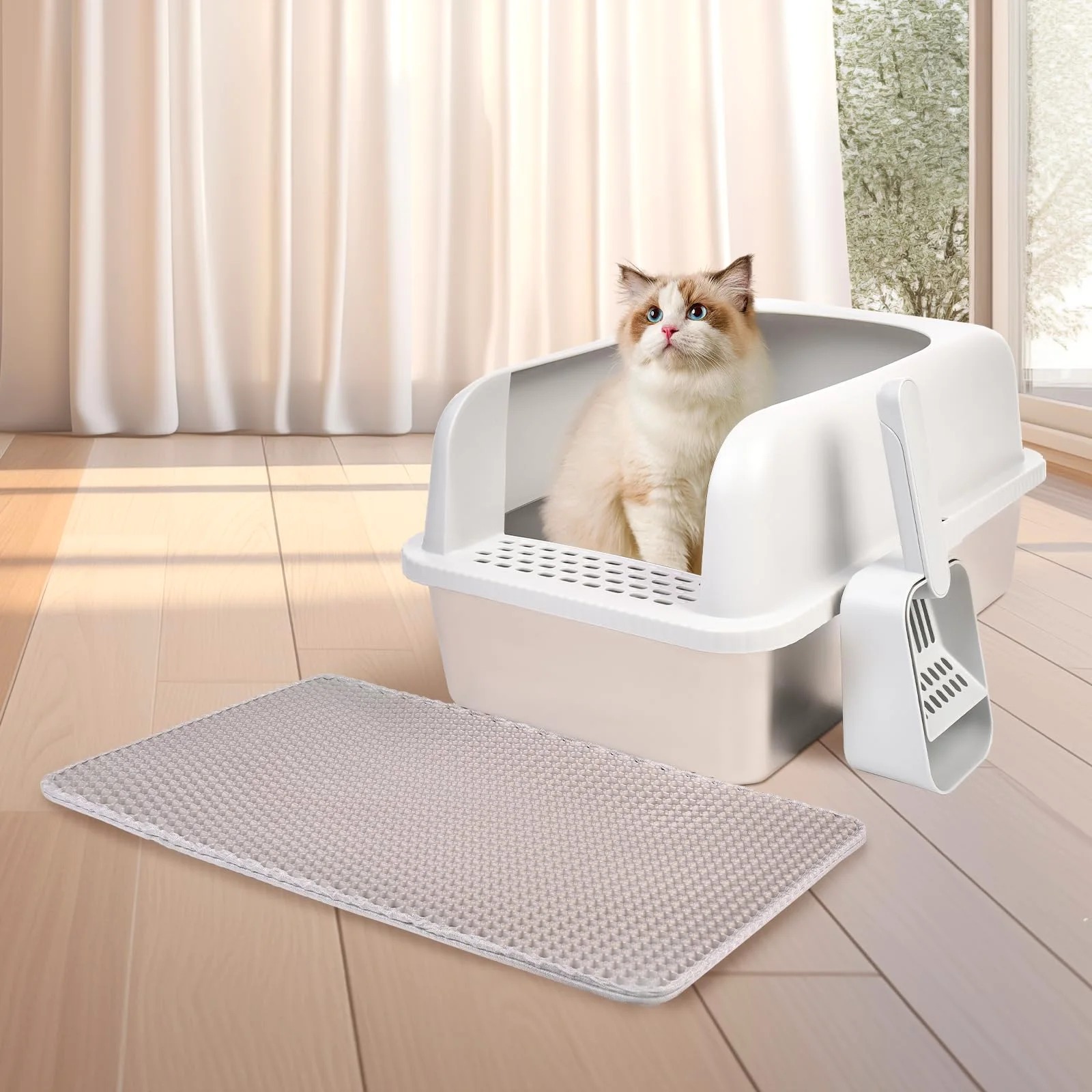
How big a litter box your cat needs, how many boxes for how many cats, where to put them, how deep the litter goes and how to wash a steel pan.
Read the guide